A Natural, Organic Approach to Increase Crop Yields
Reduce input costs, increase productivity and soil health
Plants Are Lazy
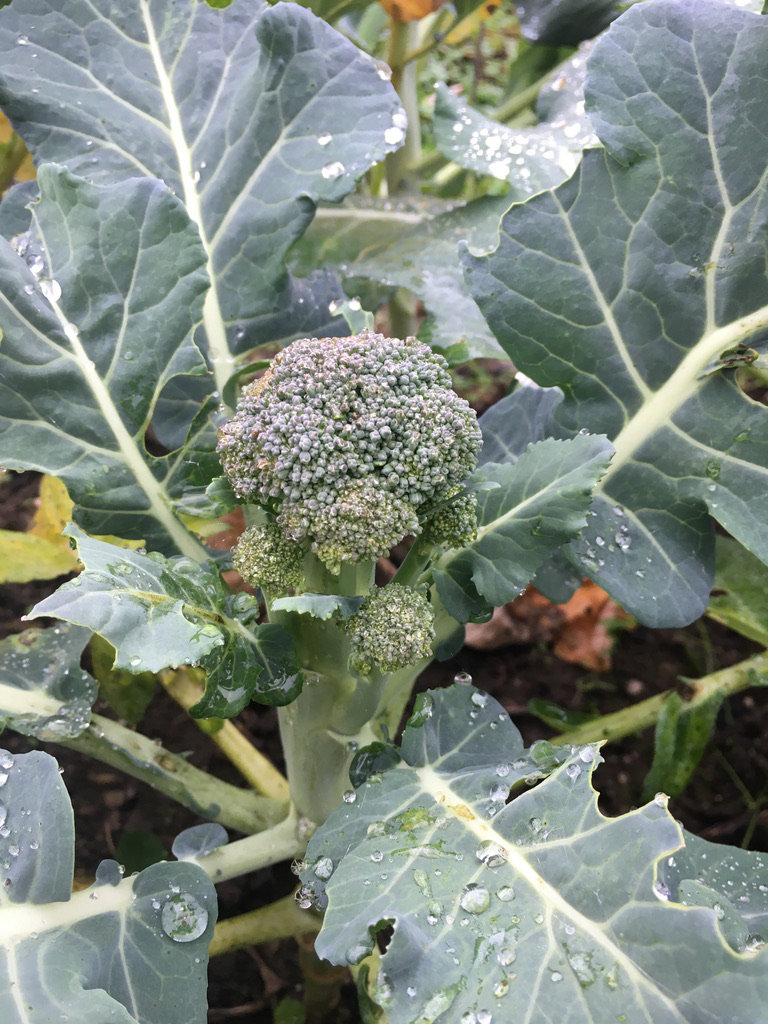
This may come as a surprise, but plants are lazy. Or said another way, they have evolved to carefully conserve resources in order to survive. Their genetic objective is not to maximize yield to feed us, but rather to produce enough seeds for the next generation.
Plants downregulate productivity due to numerous internal and external factors that change continuously. The net effect of this tendency accumulates over time to reduce yields.1
Is Fertilization The Best Remedy?
Generally, the main tool that growers use to counteract this conservative behavior is fertilizer. However, modern agriculture's reliance on high-input NPK fertilization has created a paradox: the more NPK is added to the soil, the less resilient and efficient plants become.2

Excessive Nitrogen
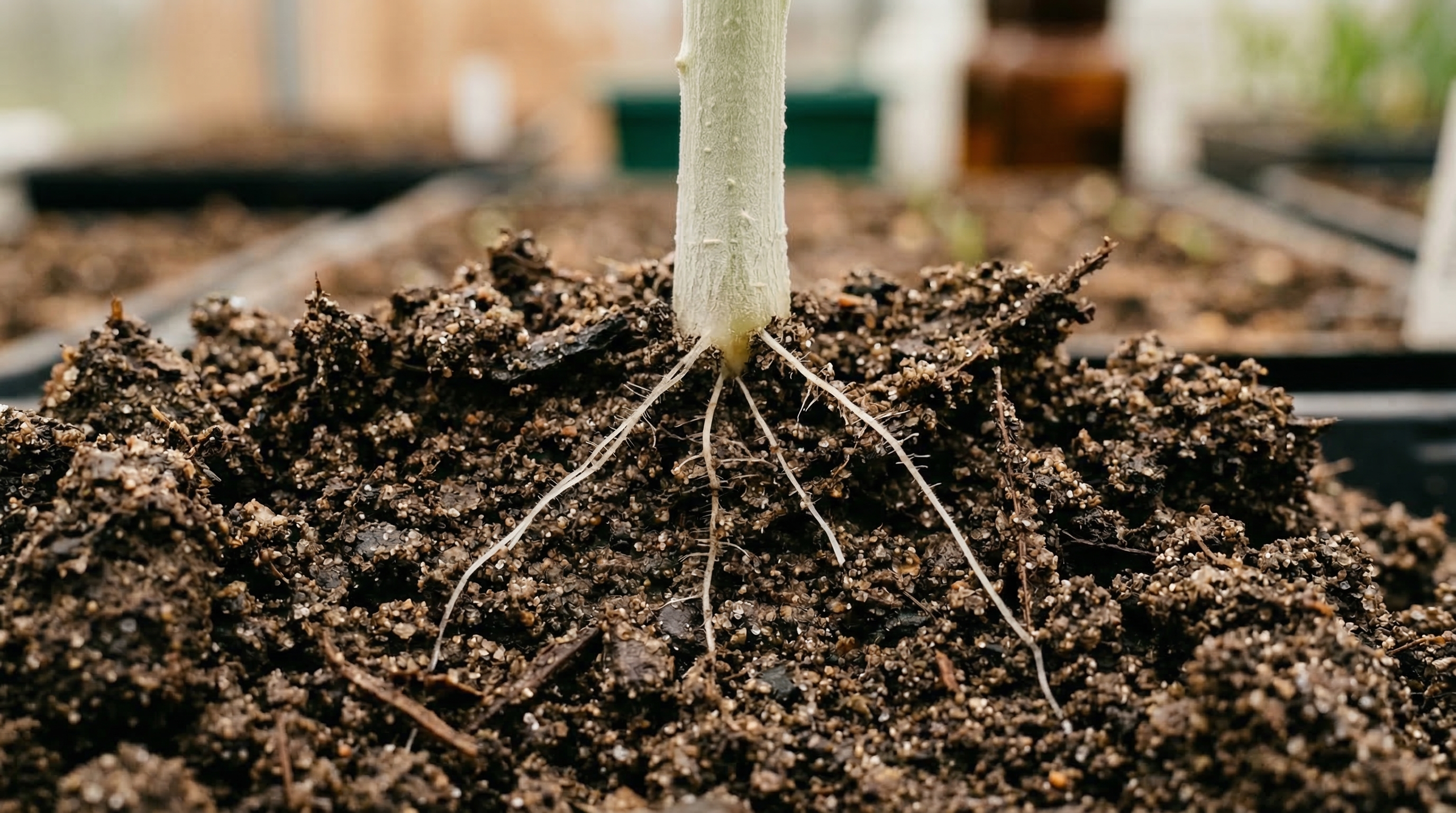
High nitrogen availability triggers plants to reduce root development and root exudation,3 the carbon-rich compounds that feed beneficial soil microbes and signal nutrient needs. The result is a shallower, less resilient root system with diminished capacity to withstand drought stress or mobilize essential micronutrients like iron and zinc from the soil.4
The Phosphorus Trap
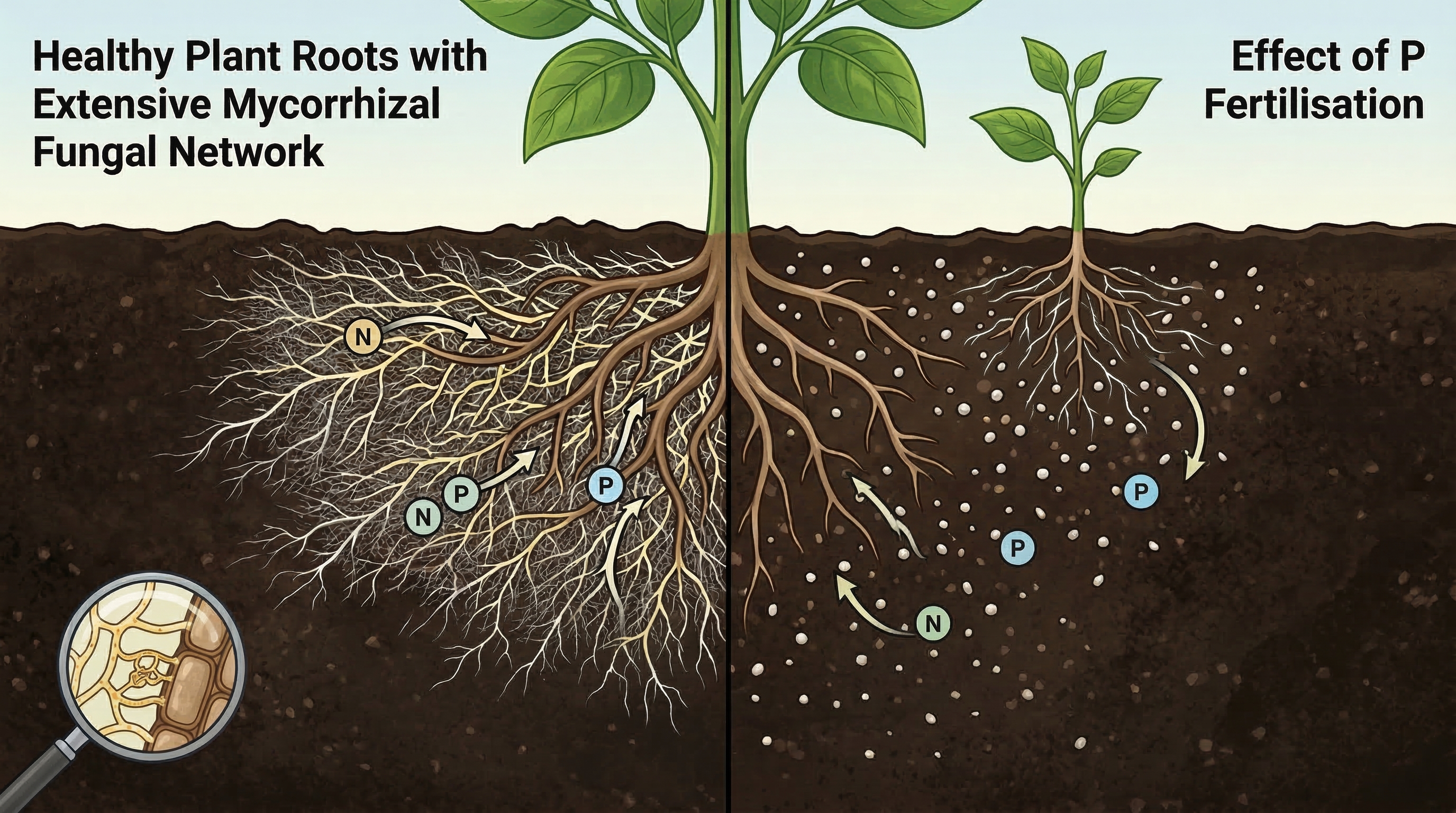
Excessive soluble phosphorus creates an even more problematic cascade. High soil P availability suppresses mycorrhizal colonization — the symbiotic fungi that naturally extend a plant's root reach by orders of magnitude. Without mycorrhizae, plants lose access to their primary mechanism for obtaining immobile nutrients, resisting drought, and maintaining soil health.
Ironically, this creates dependency: crops grown in high available-P soils require continued high phosphorus inputs because their natural nutrient foraging systems have been switched off.5
Potassium's Competitive Exclusion
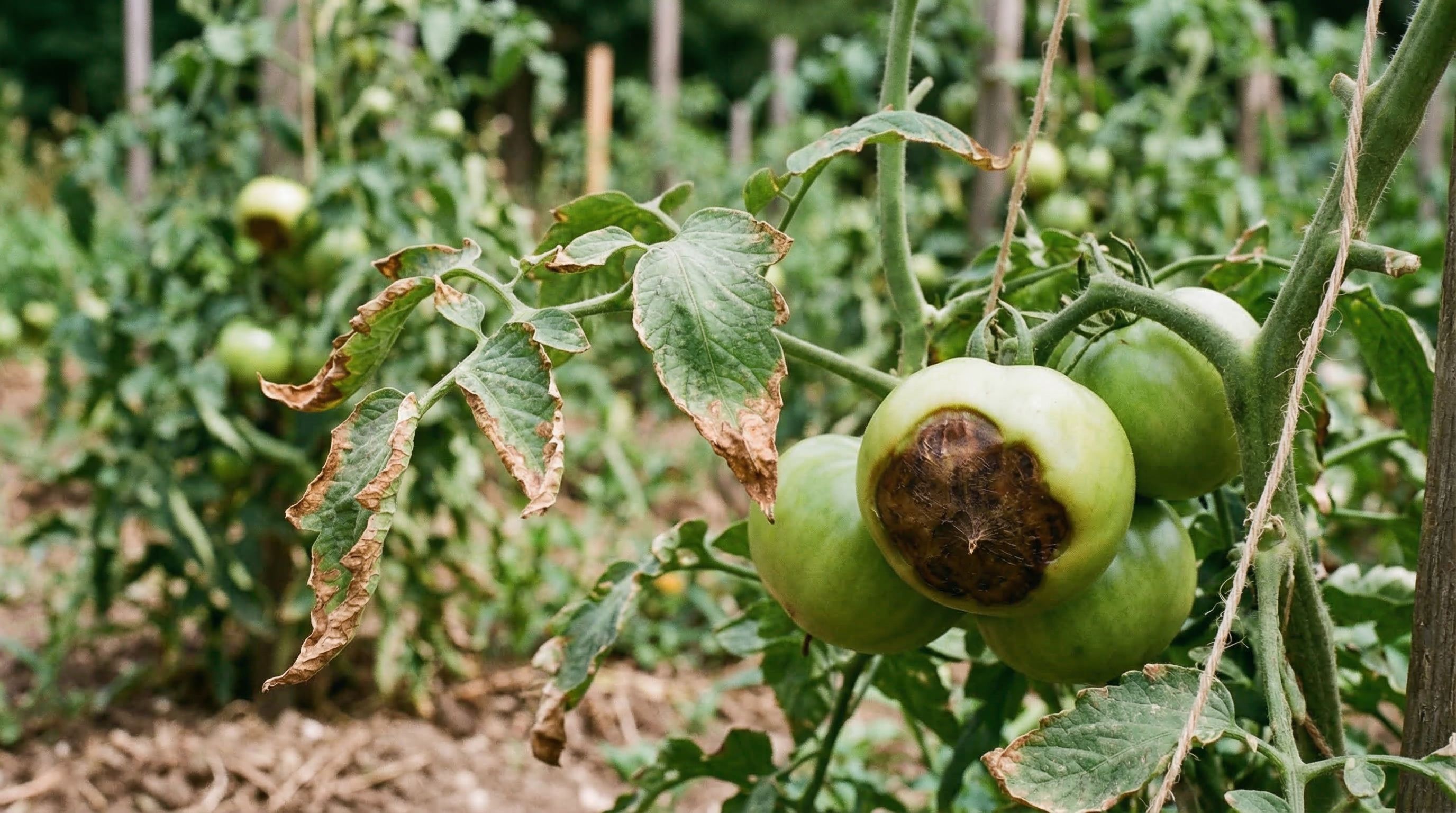
Luxury potassium consumption from excessive soil availability blocks uptake of calcium and magnesium through cation competition, creating deficiencies even when these nutrients are abundant in the soil.6 Blossom end rot, tip burn, and interveinal chlorosis can result despite adequate soil fertility. Since magnesium serves multiple essential roles in photosynthesis, as the central atom in chlorophyll, a cofactor for CO₂-fixing enzymes, and a key player in ATP synthesis, this competitive exclusion directly impairs photosynthetic capacity at multiple levels, undermining the very foundation of crop productivity that fertilization aims to enhance.7
PyGrow Upregulates Productivity
Capturing the Effect of Wildfire in a Bottle
Over the last 400 million years, the ancestors of today's plants survived countless wildfires. They evolved a powerful genetic response: detecting the organic compounds released by burning biomass, they dramatically intensify productivity — producing as many seeds as possible to repopulate the landscape.8
PyGrow captures those exact compounds. Applied at a 200:1 dilution in water, it delivers the same ancient signal — triggering an "emergency: produce more seeds" genetic pathway that conventional agriculture has never been able to access.

Proven Performance
An Agroscope meta-analysis across 65 peer-reviewed studies demonstrates consistent, significant results across multiple, diverse crops worldwide.9
31%
Average yield increase
30x
Return on investment
€15–20
Cost per hectare
9%
Soil organic carbon increase
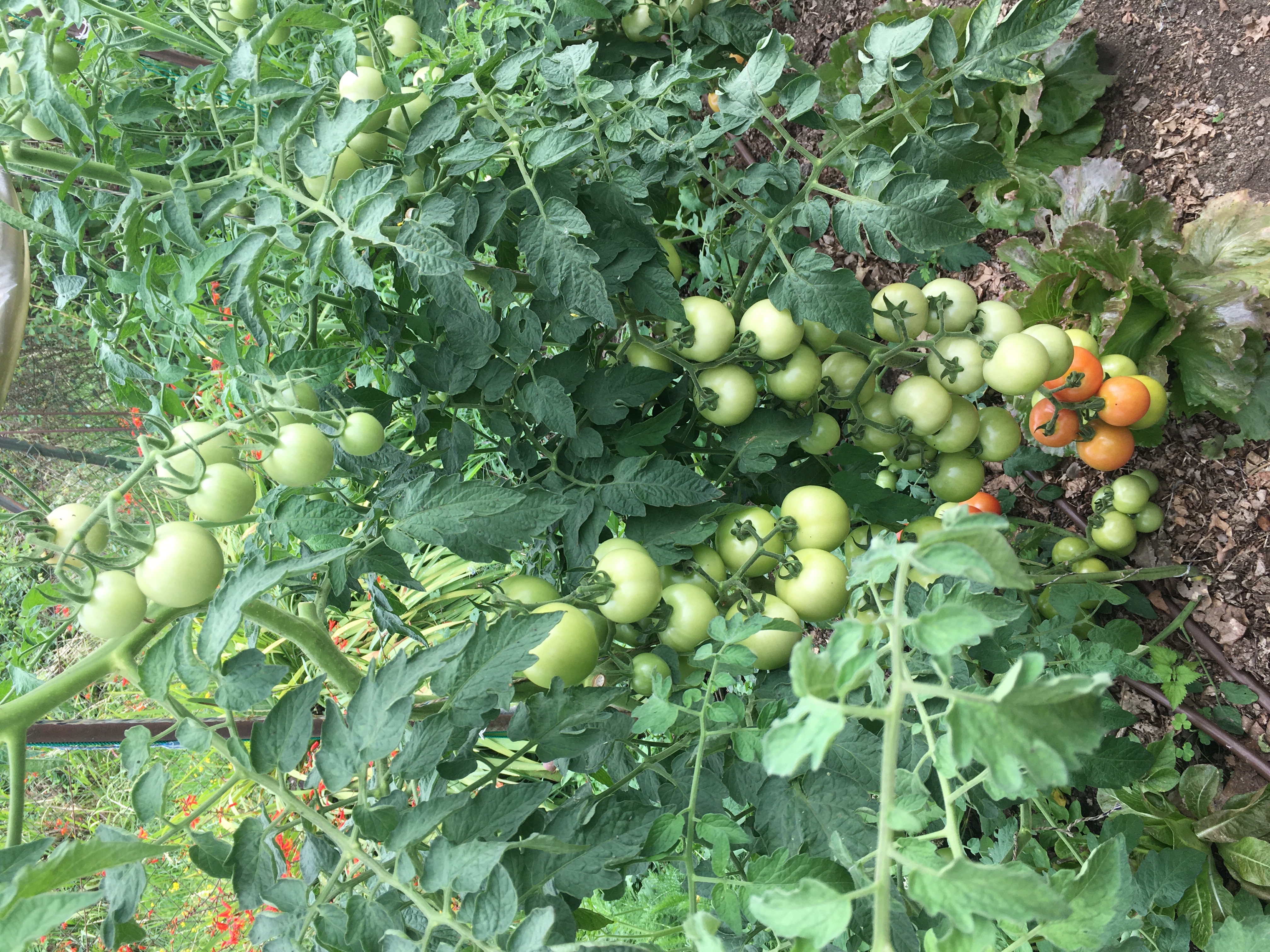
In our tomato trials, PyGrow-treated plants flowered and fruited prolifically, with minimal fertilizer applied.
Builds Soil for the Future
When PyGrow upregulates photosynthesis, plants channel up to three times more carbon into the soil as root exudates — feeding beneficial microbes. These microbes produce stable organic carbon that can persist in soil for centuries.
The Agroscope review found a 9% soil carbon increase — approximately 7 tonnes per crop cycle — around 30 times more than typically achieved on organic farms. Where synthetic fertilisers accelerate soil carbon loss, PyGrow reverses it.

Ready to Transform Your Agricultural Practice?
Join the growing community of farmers using nature's own signal to boost productivity while building soil health.